

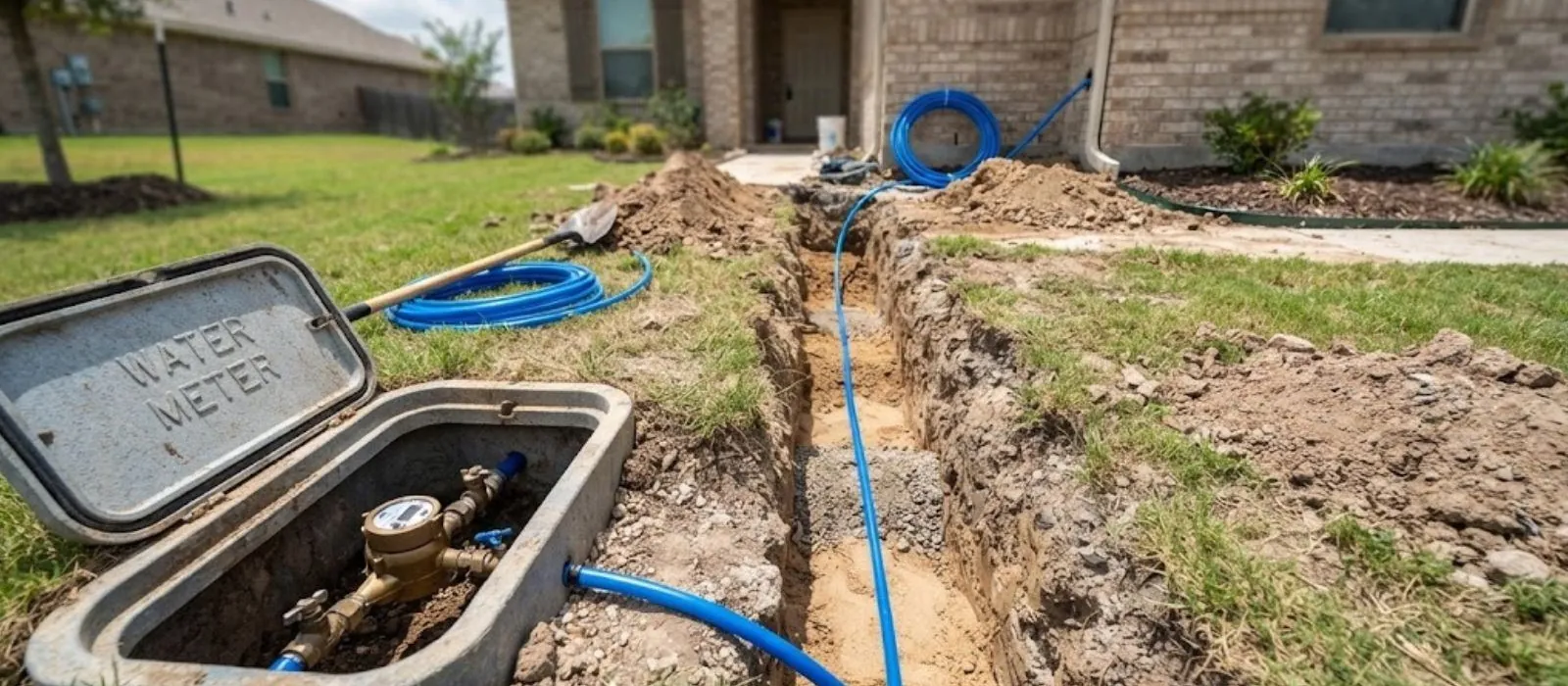
Low water pressure in a Forest Grove home is often caused by something inside the house, so check there before blaming the city supply. If only one faucet is weak, the aerator or cartridge is clogged. If the whole house is weak, check the main shutoff valve, the pressure regulator, old galvanized pipe, or a hidden leak. Homes on a private well add a pump and pressure tank to the list.
According to the EPA's WaterSense program, ideal home water pressure is 45 to 60 psi. A cheap gauge on an outdoor spigot tells you where you stand, and that one reading steers every other decision.
Is it one fixture or the whole house?
Start with the pattern. A single weak faucet almost always means a local clog or a partly closed valve under it. Weak pressure at every tap, or only when the dishwasher or washing machine runs, points to the supply side. Weak hot water only points to the water heater or its piping.
| Symptom | Likely cause | Where to look first |
|---|---|---|
| One faucet is weak. | Clogged aerator or worn cartridge. | Unscrew the aerator and rinse it. |
| One fixture weak after recent work. | Stop valve not fully open. | Turn the valve under the sink. |
| Hot side only is weak. | Water heater inlet or outlet restriction. | Heater shutoff valves and fittings. |
| Whole house suddenly weaker. | Main valve partly closed, failed regulator, or leak. | Main valve, then a gauge at the spigot. |
| Pressure fades slowly over years, brown water. | Scale and rust in old galvanized pipe. | House age and pipe material. |
| Pressure rises and falls on a well. | Pump, switch or pressure tank trouble. | Tank and pressure switch. |
Cheap fixes for one tap, then the valves
Unscrew the aerator, the little screen at the faucet tip, and look for grit or mineral flakes. Soak it in vinegar and brush it clean. If the faucet is a single-handle model with a worn cartridge, the stream may sputter or run weak on one temperature only.
Then follow the valves. A stop valve under a sink that was bumped after a repair can sit half closed and starve a fixture. The main shutoff valve at the house, often a round handle gate valve, may not be fully open after a plumber visit. Open it slowly all the way. Never touch the city meter.
If a valve turns freely but flow stays weak, the internal washer may have broken loose. Call (503) 974-3329 and a plumber can replace it.
Getting a real reading with a pressure gauge
Guessing wastes time. A hose-bib pressure gauge costs little at a hardware store and takes two minutes to use.
- Make sure no water is running anywhere in the house, including the ice maker and irrigation.
- Screw the gauge onto an outdoor hose bib or a laundry tub spigot and open the valve all the way.
- Read the dial and write it down. Test again at a different time of day.
- Compare it to 45 to 60 psi. Anything far below 45 is worth investigating, and a reading above 80 psi means a regulator should be installed or replaced.
- If the reading is normal but the flow is weak at the taps, look for restrictions inside the house.
The EPA also notes that much lower than 45 psi can mean a leak. If readings dip and the meter keeps moving while every tap is off, leak detection is the next step.
Gauge reading odd, or not sure what it means? Call and tell the plumber the number you got.
Call (503) 974-3329The pressure regulator at the main
Many homes have a pressure reducing valve, a bell-shaped brass fitting near where water enters the house. It lowers high street pressure to a level fixtures can take. Most plumbing codes require one where supply exceeds 80 psi. When it fails, you can see pressure creep too high, hammering in the walls, or a sudden drop.
Cost guides such as Angi report an average replacement cost of $400 and a range of $200 to $700. Hard access or piping changes push it up. A thermal expansion tank, which protects the system when a regulator closes it off, averages $325 ($150 to $450) in the same guides.
Old galvanized pipe and the age of your house
Galvanized steel was a common supply pipe in older homes. Over the decades the zinc coating wears, rust builds inside, and the opening shrinks like a clogged artery. The first sign is weaker pressure at the fixture farthest from the main, then brown water after the system sits.
Age tells you what to suspect. In general, homes built before about the 1960s may have galvanized lines unless they were updated. Forest Grove has 1,030 homes built in 1939 or earlier and another 298 in the 1940s, so some of that older plumbing is still out there. The City reports no lead or galvanized service lines needing replacement, but that says nothing about the pipes inside your walls.
When galvanized pipe is the cause, repiping is the permanent fix. HomeGuide figures a PEX repipe of a 2,000 square foot home at $2,000 to $4,000, and copper at $8,000 to $16,000. Altering piping inside walls, ceilings or floors needs a permit in Oregon.
Private wells and pressure tanks in plain terms
A well home gets pressure from a pump that fills a tank. A pressure switch turns the pump on when the tank drops to a low setting and off at a high one. A cushion of air inside the tank smooths the ride. When that air charge fails, the tank becomes waterlogged, the pump cycles on and off rapidly, and pressure surges.
Other well-side causes include a failing pump, a clogged sediment filter, a bad check valve, or a well that is drawing down in late summer. The homeowner is responsible for a private well. Oregon DEQ recommends testing the water every one to two years, so schedule a test while the system is being looked at.
Banks shows how mixed this can be. Its city water comes from springs and deep wells, with the wells used more in dry summers, and the city has a three-stage Water Curtailment Plan. Rural addresses outside city lines may rely on private wells, so confirm which system you are on.
City water side: what the city and you each own
On City water, pressure in the street main is the utility's job. Who owns the pipe between the meter and the house varies by city, so in Forest Grove ask Public Works at 503-992-3258. North Plains buys water from Hillsboro and the Joint Water Commission, and the city says leaks between the meter and the home call for a licensed plumber while meter to street is Public Works. Hydrant flushing can briefly stir up rusty water in older pipes.
If a service line leaks or collapses, a water service line repair is the answer, with HomeGuide quoting $50 to $200 per foot trenched. North Plains also says backflow devices on irrigation or boilers must be tested at installation, yearly and after any repair.
If the gauge reads low at several houses on the street, that is a supply question. Call Public Works in your city and ask before paying anyone to chase it.
Forest Grove Note: City water and who to ask
Forest Grove customers are on City water. The utility draws from the Clear Creek Watershed, treated at the Watercrest Road plant, and from treated Joint Water Commission water drawn from the upper Tualatin River. The latest report is the 2026 water quality report, which uses 2025 test data. For supply or pressure questions, call Public Works at 503-992-3258. For water quality or hardness, call the City water treatment team at 503-992-3259.
A reminder for any shutoff: the City never wants customers or contractors closing water at the meter. Use the house main. If a gauge test at your hose bib shows a problem, call (503) 974-3329 and we will talk through the readings.