

New plumbing is mostly a question of planning. Where does the water come in, where does it drain, and which of those changes need a permit before anyone cuts a wall? Our licensed plumbers can look at the space, explain the options, and give you a clear price before work starts. To set up a planning visit, phone (503) 974-3329.
This page walks through the common jobs, which ones need a permit in Forest Grove under Oregon rules, and what to settle before a remodel begins. We take same-day appointments when available for a first look, and our dispatch runs 24/7 if something in your plan turns urgent.
What to Settle Before the First Cut
Every plumbing change starts with three questions. Where is the existing supply, drain and vent for this room? How far is the new fixture from them? And what is behind the wall, floor or ceiling you plan to open? Answers decide whether the job is an afternoon swap or a rough-in that needs inspection.
Bring a sketch or photos to the first visit. Include the make and model of any fixture you already own, since a freestanding tub or a wall-hung toilet changes the framing. If you are building out a basement or garage, say so early. A drain below the level of the sewer line needs a different solution than one above it.
Which Jobs Need a Permit and Which Do Not
Oregon Building Codes Division guidance puts the dividing line at what you touch. The person doing the work, whether a homeowner or a contractor, gets the permit. In Forest Grove that means the City Community Development office at 1924 Council St, 503-992-3229. Cities and counties around us handle it differently, covered below.
| Job | Permit? | Why |
|---|---|---|
| Replacing a sink, toilet or faucet that is not concealed in a wall. | No | Fixture swap, no change to concealed piping. |
| Installing a shower head or hose bibb. | No | Exposed fixture work. |
| Installing a water filter. | No | Treatment device, no pipe alteration. |
| Altering piping in walls, ceilings or floors. | Yes | Concealed work needs inspection. |
| Relocating plumbing in a remodel. | Yes | New rough-in is new work. |
| Replacing a water heater. | Yes | Safety items like strapping and relief valve. |
| Building sewer or water service. | Yes | Connections to public systems. |
Once issued, a permit lapses after 180 days without a start. Do not start cutting and file later. If you are not sure which side of the line your project falls on, call the Community Development office or ask us before work begins.
Have a remodel or new fixture in mind? Call and we will schedule a licensed plumber to look at it.
Call (503) 974-3329Rough-In: Moving a Sink, Tub or Laundry Hookup
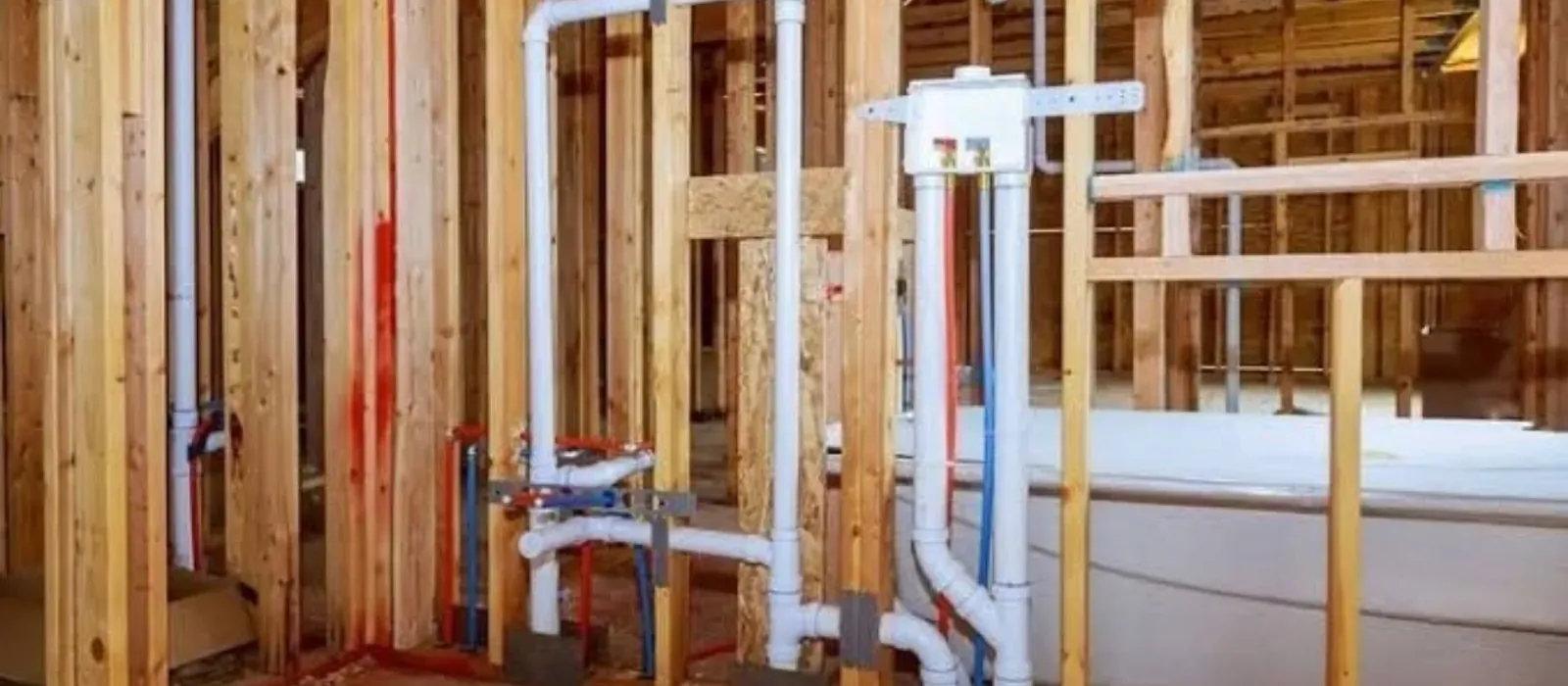
Rough-in is the pipe work you never see after drywall goes up. Supply lines bring hot and cold water to the spot. A drain takes water away at a steady downward slope. A vent lets air into the drain so water leaves smoothly instead of gurgling. All three have to line up with the fixture you chose.
Moving a kitchen sink across the room means a longer drain run and sometimes a new vent path. Moving a toilet is harder, because the drain is larger and the floor framing may be in the way. Slab floors add cost because concrete must be cut to reach buried lines. This is the work that triggers a permit and an inspection before the walls close.
Ask for the inspection sticker or sign-off before you hang drywall. If walls are already open for a repipe, it makes sense to price new fixtures in the same project. See our repiping page for that side of the job.
Setting New Fixtures the Right Way
A fixture is only as good as its connections. New toilets should be set on a fresh wax ring, level and bolted to the flange. Faucets get new supply lines and working angle stops. Dishwashers and ice makers need their own shutoffs. A hose bibb should have an inside valve you can close before winter.
Toilets are also where conservation shows up. The City of Forest Grove offers a $75 rebate on WaterSense toilets that use 1.28 gallons per flush or less. It is limited to two per household for life and the application must be made within 60 days of purchase. Check with the City before buying.
Pressure matters on a new job. EPA says most plumbing codes call for a pressure regulator where supply exceeds 80 psi. A garbage disposal, which cost guides list at about $200 to $625 installed, is a common add-on during a kitchen remodel. Troubles after the fact are covered on our garbage disposal repair page.
Water Heaters and Gas Appliances Follow Their Own Rules
A water heater replacement needs a permit. Heaters must be anchored or strapped under the Oregon Plumbing Specialty Code, and thermal expansion protection and relief-valve termination are code items when one is replaced. Angi reports an expansion tank averages $325 with a range of $150 to $450. Our water heater installation page covers the details.
Gas is stricter still. Installing or repairing LP gas appliances or piping takes a license, and that includes homeowners. Gas piping and flue need a mechanical permit, and water piping to a tankless unit needs a plumbing permit. If you ever smell gas, get out first. From outside, call NW Natural at 800-882-3377 or 911. We do not diagnose gas leaks by phone.
Older Forest Grove Houses Hide Surprises
About 48 percent of Forest Grove homes were built before 1980, and 1,030 date to 1939 or earlier. Opening a wall in one of those houses can reveal pipe that no longer matches modern fittings, framing notched in earlier decades, or past repairs. Budget a margin for surprises.
The Clark and Painter's Woods historic districts lie south of downtown, and Historic Downtown centers on Pacific Avenue and Main Street. Older homes in these areas often hold several eras of plumbing, so a plumber will want to see the existing lines before giving a price.
Permits in the Towns Around Forest Grove
Rules shift across town lines. In Cornelius, building services are contracted from the City of Forest Grove Building Division. Hillsboro issues its own plumbing permits. Banks and North Plains rely on Washington County. If you work across several towns, tell your plumber which one the project is in. For help with a project in any of them, call (503) 974-3329.
What Installation Costs and What Moves the Number
Prices vary because no two jobs share the same walls, floors and fixtures. Cost guides give some anchors. According to HomeGuide, faucet replacement totals $200 to $600. Angi lists a pressure regulator replacement at an average of about $400 with a range of $200 to $700, which gives a sense of scale. Your plumber gives a clear price before work starts.
Distance from existing lines
A fixture beside the old one costs less than one across the room.
What the floor is made of
Slab floors mean cutting concrete. Crawlspaces and basements make runs easier.
Fixture type
Wall-hung toilets, freestanding tubs and multi-head showers take more framing and time.
Permit and inspection
Concealed work and relocations carry City fees and an inspection.
Who supplies the fixture
Fixtures you buy yourself should be checked against the rough-in before the visit. Ask the plumber about any parts they supply.
Installation work is normally an owner expense. Insurance may apply if a failed new connection later causes water damage, so keep permit records and receipts for your files.
To get a clear price for your project, call (503) 974-3329.
Ready to plan the work? Call and we will schedule a time to review your space.
Call (503) 974-3329