

A sink that will not drain, a tub filling with gray water or a toilet that gurgles when the washer runs is an emergency once the water is headed for your floor. Stop using that fixture, keep the rest of the drains in the house quiet, and call (503) 974-3329. Our 24/7 dispatch sends a licensed plumber, and you get a clear price before work starts.
This page covers the clogs that come up most in Forest Grove homes, from grease-packed kitchen lines to slow branch lines that back up more than one fixture. It also shows how snaking and jetting differ, and when a repeat clog means something is wrong in the pipe.
Emergency Signs a Clog Cannot Wait Until Morning
Most clogs are a nuisance. A few are not. Water climbing toward the rim of a tub or toilet is a warning. So is more than one slow fixture at the same time, or gurgling from a drain you did not use. Any of these means the blockage is probably past the first few feet of pipe and getting worse. A bad clog at 11 p.m. still needs clearing tonight, and our after hours dispatch handles that.
Stop running water in any fixture that is draining slowly. Pull the washing machine plug if it drains into the same line. If anything coming up smells like sewage, keep kids and pets out of the room and call now.
What Clogs Drains in Older Forest Grove Houses
The housing numbers explain a lot. About 48 percent of Forest Grove homes were built before 1980, and roughly 1,030 date to 1939 or earlier. Older houses often have long, shallow-pitched branch lines, rougher pipe walls and more joints, all of which catch grease and lint sooner than a smooth modern run.
In the historic districts south of downtown, including Clark and Painter's Woods, one house can hold pipe from several decades. Where old pipe meets a newer addition, the joint is where debris likes to stop.
Water not moving and not sure why? Call and talk it through with dispatch.
Call (503) 974-3329Snake or Jet: Matching the Tool to the Clog
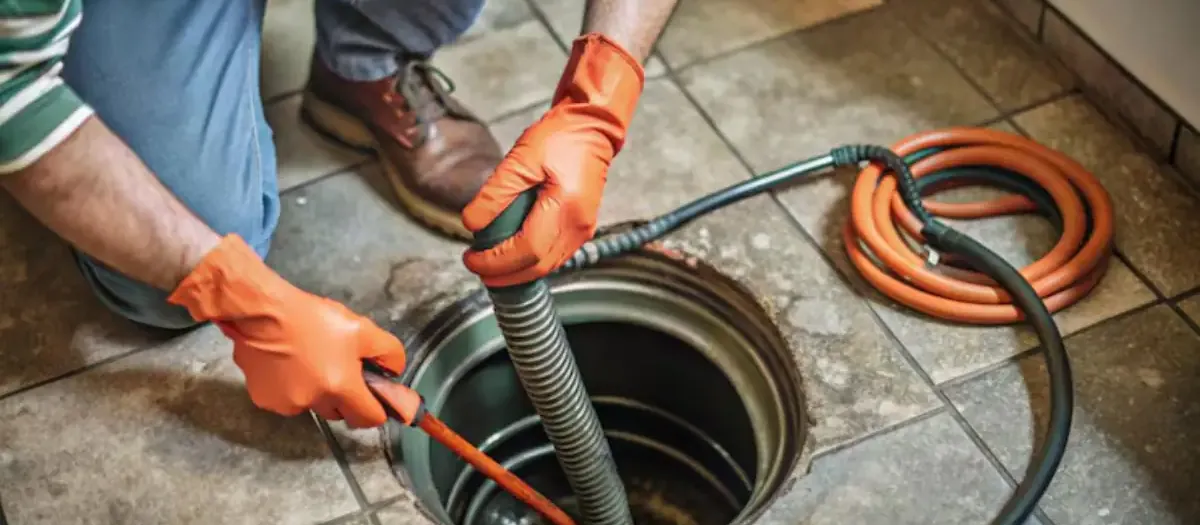
A drain snake, also called a cable or auger, is a coiled steel line that a plumber feeds into the pipe to bore through or hook a clog. A jetter pushes high-pressure water through a hose to scour the pipe wall. The EPA calls jetting the most common hydraulic cleaning technique, and it is the better choice when grease or scale coats the pipe rather than plugging it in one spot.
| Situation | Usually the better tool | Why |
|---|---|---|
| Roots in a long branch line. | Cutting head on a cable, then a camera look. | Roots need cutting, then you need to see the pipe. |
| Same clog back every few months. | Camera first, then the right tool. | A repeat clog is often a belly, a joint or a crack. |
For deeper detail on the pressure option, see our page on high-pressure water jetting. A plumber often starts with a cable because it is quick, then move to the jetter only if the first pass shows a heavy coating.
Where the Clog Sits Tells Us What to Do
| What you notice | Likely location | Next step |
|---|---|---|
| Kitchen sink slow, dishwasher fills the sink. | Kitchen branch or the air gap. | Cable the branch, check the disposal outlet. |
| Tub and sink slow together. | Shared bathroom branch | Cable the branch from a cleanout or the tub. |
| Floor drain or lowest tub backs up. | Main building drain | Call right away, see main line cleaning. |
When the clog turns out to be below the house, past the last cleanout, the job changes. The sewer lateral, the pipe from your house to the public sewer, belongs to the property owner under City Ordinance 52.03, so a plumber working on it needs the right permits and utility locates.
Wipes, Grease and What Clean Water Services Asks of You
Clean Water Services asks everyone in the area not to flush wipes, even the kind sold as flushable, and not to flush paper towels or mop refills. Those materials do not break down like toilet paper. They catch on rough spots, snag on roots and knit into a mat that a cable cannot always pull free.
Grease is the other regular offender. It leaves the pan as a liquid, cools in the pipe and builds a waxy ring that narrows every year. CWS asks that you keep it out of drains and offers a Freeze the Grease kit by phone at 503-681-3678. Wiping pans with a paper towel before washing helps more than any additive.
What You Can Try Before You Call
- Remove the stopper or strainer and pull out any hair you can see.
- Use a cup plunger on a sink or tub, with the overflow opening blocked by a wet rag.
- Put a bucket under the sink trap, unscrew the slip nuts by hand and clean the trap out.
Skip bottled chemical openers. They can sit in a stopped pipe and burn skin or eyes when a plumber opens the line, and they do little against hair or wipes. If you already poured some in, tell us on the phone.
What Drain Cleaning Costs and Why It Varies
Cost guides give a wide spread. According to Angi, the national range for drain cleaning is $147 to $352, with kitchen sink work about $110 to $215 and a Portland average of $510 (range $172 to $847). These are typical figures from guides, not a quote. You hear our price before any work begins.
How far into the pipe the clog sits
A plug at the trap takes minutes. One thirty feet down a branch needs more cable and more time.
Tool needed
Angi puts snaking at about $100 to $250 and jetting at about $350 to $600.
Access
A clean-out outside is easy. Pulling a toilet to reach the line adds labor.
Cause of the clog
Hair is cheap to clear. Roots or a collapsed section may need a camera and a repair.
Homeowners insurance rarely covers a clog from ordinary use. Sudden backup coverage, if you have it, may apply when sewage damages floors or belongings, so ask your insurer before you throw anything away and take photos first.
Call (503) 974-3329 and a dispatcher will explain the options, and you get a clear price before work starts.
When a Repeat Clog Means Something Is Wrong in the Pipe
Two clogs in the same line within a year deserve a different question. Instead of asking how to clear it again, ask why it keeps stopping. A camera inspection of the line shows whether there is a sag where water pools, a cracked joint, or roots working in at a seam.
Homes in Cornelius and Hillsboro follow the same rule of thumb, and you can call (503) 974-3329 on nights and weekends too.
Drain still stopped after the basics? Call now and a licensed plumber can take it from here.
Call (503) 974-3329