

Water is coming through a ceiling, the floor feels warm and damp, or the meter is spinning when nothing is on. That is an emergency, and our 24/7 dispatch is ready for the call. Shut the main valve at the house right now, turn off the power to any wet room if you can reach the breaker safely, and call (503) 974-3329.
Not every leak announces itself. Many show up only as a high water bill, a musty smell, or the sound of running water in a quiet house. Finding the exact spot without opening every wall is the whole job. We handle same-day appointments when available, and the price comes before the work does.
Water Where It Should Not Be Tonight
Active water damage gets handled in order. Stop the supply, protect what is dry, then find the source. The main shutoff valve is usually where the water line enters the house, often in a garage, crawlspace or utility room. Turn it clockwise, then open one low faucet to drain the pipes.
In Forest Grove, do not shut water off at the city meter. The City says customers and contractors never do that, and if the meter or line breaks afterward the repair falls to the owner. If the house valve will not close, call Public Works at 503-992-3258 and the City will close the supply. There is no fee in business hours and a fee after hours.
Ceiling stains that grow, bulging drywall or water dripping from a light fixture mean water is collecting overhead. Shut the main, stay out from under the sag and keep power off to that room.
Run the Two-Hour Meter Test Yourself
You can find out whether you have a leak before anyone arrives. According to EPA WaterSense, you should check the meter before and after two hours with no water use. It sorts leaks inside the house and beyond it from ordinary use.
- Turn off every faucet, appliance, ice maker and irrigation zone, and make sure nobody flushes.
- Open the meter lid and note the reading and whether the small leak indicator is turning.
- Wait two hours without using any water.
- Read the meter again. Any change means water is leaking somewhere.
A moving indicator with every fixture off means a leak. If the number stays put, the leak may be intermittent, like a toilet that refills on its own. Closing the main valve and watching the meter again helps separate a leak in the house from one on the service line. If the meter moved, call (503) 974-3329.
What Your Water Bill Is Telling You
Bills are slow evidence, but good evidence. EPA says a family of four using more than 12,000 gallons a month in a colder month may have serious leaks. A winter bill that jumps with no change in habits is worth a meter test.
Water pressure is another clue. EPA describes ideal home pressure as 45 to 60 psi, and pressure much lower than 45 can mean a leak. A gauge threaded onto a hose bibb takes a minute. In North Plains, the City says leaks between the meter and the home are a licensed plumber's job, while meter to street belongs to Public Works.
| Sign | What it often means | First step |
|---|---|---|
| Meter moves with everything off. | Leak on the service or house line. | Shut the main and call. |
| Warm spot on a floor. | Hot line leaking under a slab. | Shut the water heater supply and call. |
| Musty smell, no visible water. | Slow leak inside a wall or crawlspace. | Check the meter, then book a visit. |
| Sound of running water at night. | Pressurized leak or a running fixture. | Shut the main and listen again. |
| Toilet tank dye shows in bowl. | Flapper not sealing | Replace the flapper. |
Meter moving or water showing up? Call and we will send a licensed plumber to trace it.
Call (503) 974-3329How Plumbers Pinpoint a Leak Without Demolition
The goal is to narrow the search before cutting anything. A plumber starts by isolating sections of pipe with valves and watching a gauge. A pressure test holds water in one branch and shows whether it loses pressure. The branch that drops is the one with the leak.
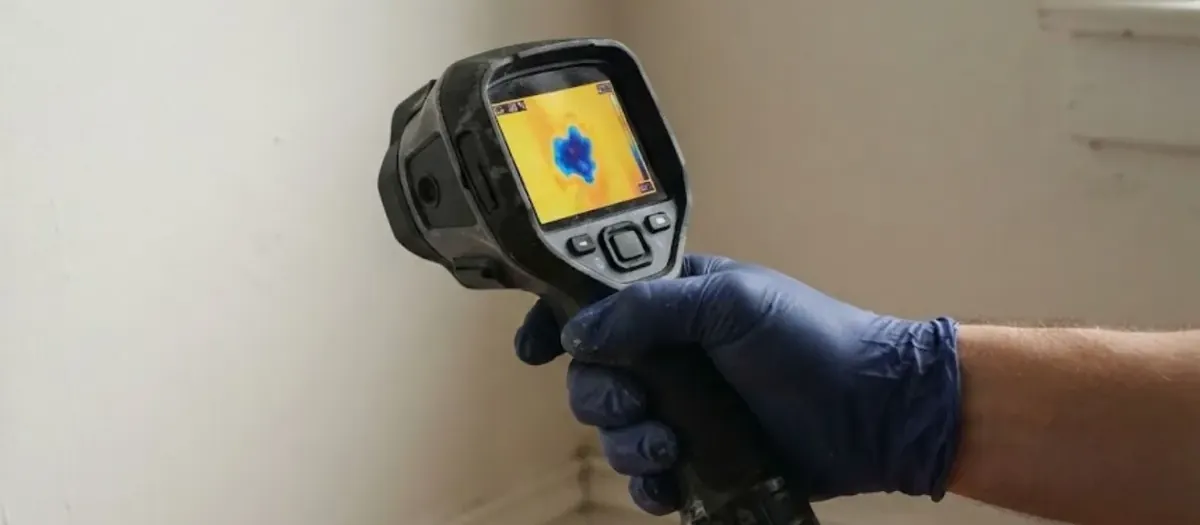
Acoustic methods come next. Sensitive listening gear picks up the hiss of pressurized water escaping a pipe, and a trained ear can mark a spot on a floor or wall. Moisture meters and thermal imaging help show where water has traveled. Drains are a different story, and a camera inspection suits those. We describe the method before using it.
Once the spot is marked, the choice is a small access hole, a patch, or a larger repair. A single failed fitting is a quick fix. A pipe that is pitted along its whole length may point toward replacing the piping instead of chasing leaks one at a time.
Slab Leaks and Old Pipes in Forest Grove Homes
Some houses with slab floors keep supply lines under the concrete, and a failing hot line can warm the floor above it. Angi puts slab leak detection at an average of $280 with a range of $150 to $400 and reports a plumber's flat leak diagnosis around $150. Repair is billed separately.
Forest Grove's housing spans a wide age range. The 2020 to 2024 American Community Survey shows a median year built of 1982, with about 48 percent of the 9,094 units built before 1980 and 1,030 in 1939 or earlier. Older houses mix copper, galvanized steel and later patches, and the joints between them leak first. The City reports no lead or galvanized service lines needing replacement, so any galvanized pipe in those homes is on the house side.
A leak on the line between the meter and the house is its own repair. See our page on water service line repair. For who owns what in Forest Grove, ask Public Works at 503-992-3258.
Quiet Leaks: Toilets, Heaters and Outdoor Lines
A toilet flapper that does not seal sends water down the drain all day. Drop a dye tablet or food coloring into the tank, wait 10 minutes, and color in the bowl means a leak. EPA suggests replacing flappers at least every five years. The City of Forest Grove offers dye tablets and a $75 rebate on WaterSense toilets. Our toilet repair page covers the fix.
Water heaters leak at the temperature and pressure valve, the drain valve and through the tank itself. EPA advises checking that valve at least once a year. For outdoor spigots, close the inside valve feeding the hose bibb, then see whether the meter still moves.
What Leak Tracing Costs and Why It Varies
Detection is priced by time and difficulty, not by a set menu. The cost guide figures above are only a yardstick. Our price is given before work starts, and we explain what method we plan to use.
Where the leak is
A visible fitting under a sink takes minutes. A line under a slab or behind tile takes longer to pin down.
Type of pipe
Copper, galvanized steel and plastic carry sound and pressure differently, so the method changes.
Access
Open crawlspaces help. Finished basements and tile floors mean more time and more repair afterward.
Number of leaks
Older systems often leak in more than one place, so the first find may not be the last.
Timing
Cost guides say after hours calls often cost more, and the price is stated before work starts.
Home policies often cover sudden water damage but may not cover the pipe itself or long-term seepage. Ask your insurer what documentation they need and keep your meter readings, photos and the plumber's findings together.
For a clear price on tracing your leak, call (503) 974-3329.
Tonight or This Week: Sorting the Urgent Leak From the Slow One
Not every leak needs a midnight call. Water spraying, dripping through a ceiling, or running across a floor is an emergency, and so is a meter that keeps spinning with every fixture off. A damp cabinet or a slightly high bill can wait for a same-day appointment when available.
When a pipe has already split, the work moves from finding the leak to repair, and our burst pipe repair page covers that side. If you are only guessing at a source, shut the main valve at the house, call (503) 974-3329 and describe what you see. The same steps apply in Hillsboro and Cornelius.
Want the leak found before it spreads further? Call a licensed plumber now.
Call (503) 974-3329