

When a main line is full to the brim and a cable has already failed, hydro jetting is often the next move, and it is an emergency if sewage is coming up. Stop using water in the house now, including the washer and dishwasher, and call (503) 974-3329. Our 24/7 dispatch sends a licensed plumber who looks inside the pipe before high-pressure water goes in, and you hear the price first.
Jetting gets oversold and misunderstood. It is excellent on grease and roots and wrong for some pipe. Here is how it works, when a cable is enough, which pipes should not be jetted, and why the camera comes first.
How a Jetter Works and Why Plumbers Reach for It
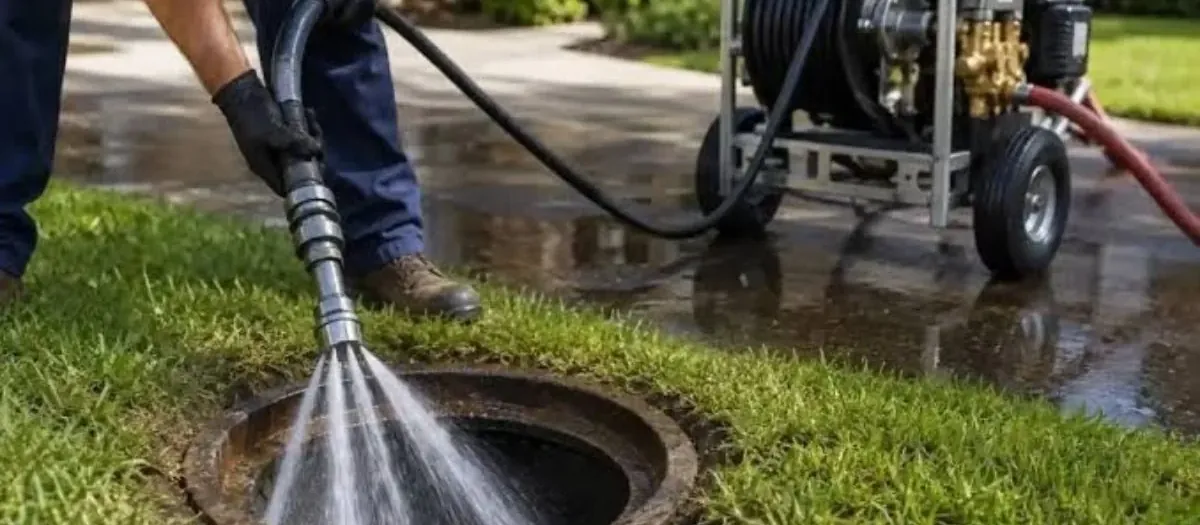
A jetter is a pump, a long hose and a nozzle with several small holes. Water is forced out of those holes at high pressure. Some jets point backward and pull the hose forward through the pipe, while others spray sideways to scrape the wall. The EPA describes jetting as aiming a high-pressure water stream at a blockage, the most common hydraulic cleaning technique.
Cable or Jetter: Choosing Without Overspending
Not every stoppage needs pressure. A hair plug or a lodged object is a cable job, covered on our page about clearing clogged drains, and costs less. Jetting earns its price when the pipe is coated, when a cable keeps breaking through but the line never runs right, or when roots have filled a long run.
| Condition | Cable | Jetter |
|---|---|---|
| One solid obstruction near a cleanout. | Usually enough | Rarely needed. |
| Grease lining the whole pipe. | Opens a channel only. | Strips the lining. |
| Heavy scale or mineral buildup. | Scrapes poorly | Scours the wall. |
| Cracked, collapsed or offset pipe. | Can still snag | Do not jet until it is mapped. |
Camera First: What We Need to See Before We Blast
A camera on a push cable shows what the pipe is made of, where it bends and whether it is intact, and a full camera inspection of the line can be booked on its own. Without it, jetting is guessing. High-pressure water does little harm to sound pipe, but it can widen a crack or drive debris into a joint that was barely holding.
A recording of the pipe is useful beyond the visit. If the damage turns out to be in the public right of way, Clean Water Services Field Operations at 503-547-8100 accepts video from a plumber or homeowner when someone asks them to look at a defect.
Not sure whether your line needs a cable or a jetter? Call and describe what the drains are doing.
Call (503) 974-3329Grease Scale and Roots: Where Jetting Earns Its Price
Grease does not stay greasy. It cools, mixes with soap and food, and hardens into a layer that grows inward like a candle drip. It is common on busy kitchen lines and on lines serving restaurants.
Roots are the second big reason. They enter at a joint looking for moisture and then thicken into a mat. Forest Grove gets 46.72 inches of precipitation a year, and wet winters keep buried soil moist, which draws roots toward any small leak. Jetting with a cutting nozzle removes roots without a dig, but roots grow back, so plan on repeat cleaning or a repair if they keep returning.
Pipes That Should Not Take Pressure
About 48 percent of Forest Grove homes were built before 1980, and about 1,030 date from 1939 or earlier. Old pipe is not automatically weak, but old, corroded or cracked pipe is. Roots can leave thin spots. Joints can shift. A scale-thickened wall can hide a weak one.
If the camera finds a defect, see our page on repairing a damaged sewer line for options.
What a Jetting Visit Looks Like Start to Finish
- A camera goes in to confirm material, depth of the blockage and pipe condition.
- A cable opens a path if the line is completely stopped, since the jetter needs water to flow.
- The nozzle is run to the clog and pulled back slowly, washing walls as it comes.
- A second camera pass confirms the line is clear, and you see the footage.
Backups Tonight: What to Do While You Wait
Sewage coming up through a floor drain or tub at night is an emergency. Keep everyone out of the room and off the affected floor. Do not flush. Do not run the washing machine. Turn off water appliances that drain into the same line.
If sewage is rising and you cannot stop it, call (503) 974-3329 now. We take after hours calls around the clock, and a licensed plumber can be sent same-day when your situation allows. You get the price before work starts.
Hydro Jetting Costs and What Moves the Number
According to Angi, the national average for hydro jetting is near $475, with a very wide range from $100 to $2,000. Its Portland average is $501 with most jobs between $369 and $632. HomeGuide puts a main line that needs jetting at $600 to $1,400. These are guide figures, not our price. We quote before we start.
Length and size of the line
A short run to a nearby cleanout is simpler than a long run under a yard.
What is in the pipe
Light grease clears faster than thick roots or hard scale.
Access
A good outdoor cleanout saves time. Pulling a toilet adds labor.
Camera work
The inspection before and after is part of the job. A recording adds to the cost, but it protects you.
Home policies seldom pay for cleaning a line that clogged from normal use. If sewage backs up and damages the home, a water backup endorsement may help, so photograph everything and call your insurer before cleanup.
Call (503) 974-3329 and a dispatcher will walk you through what the visit includes and what it costs.
Keeping the Line Clear After Jetting
A freshly jetted line is clean, not permanent. Grease can return if habits stay the same. Clean Water Services asks residents not to pour grease down drains and offers a Freeze the Grease kit at 503-681-3678. It also asks everyone to keep wipes labeled flushable out of the toilet.
For help in nearby towns, see our pages for Hillsboro and North Plains. Ask the plumber for a copy of the video and a note of the depth and location of any problem.
Line backing up and a cable did not hold? Call now for a camera look and a clear price.
Call (503) 974-3329