

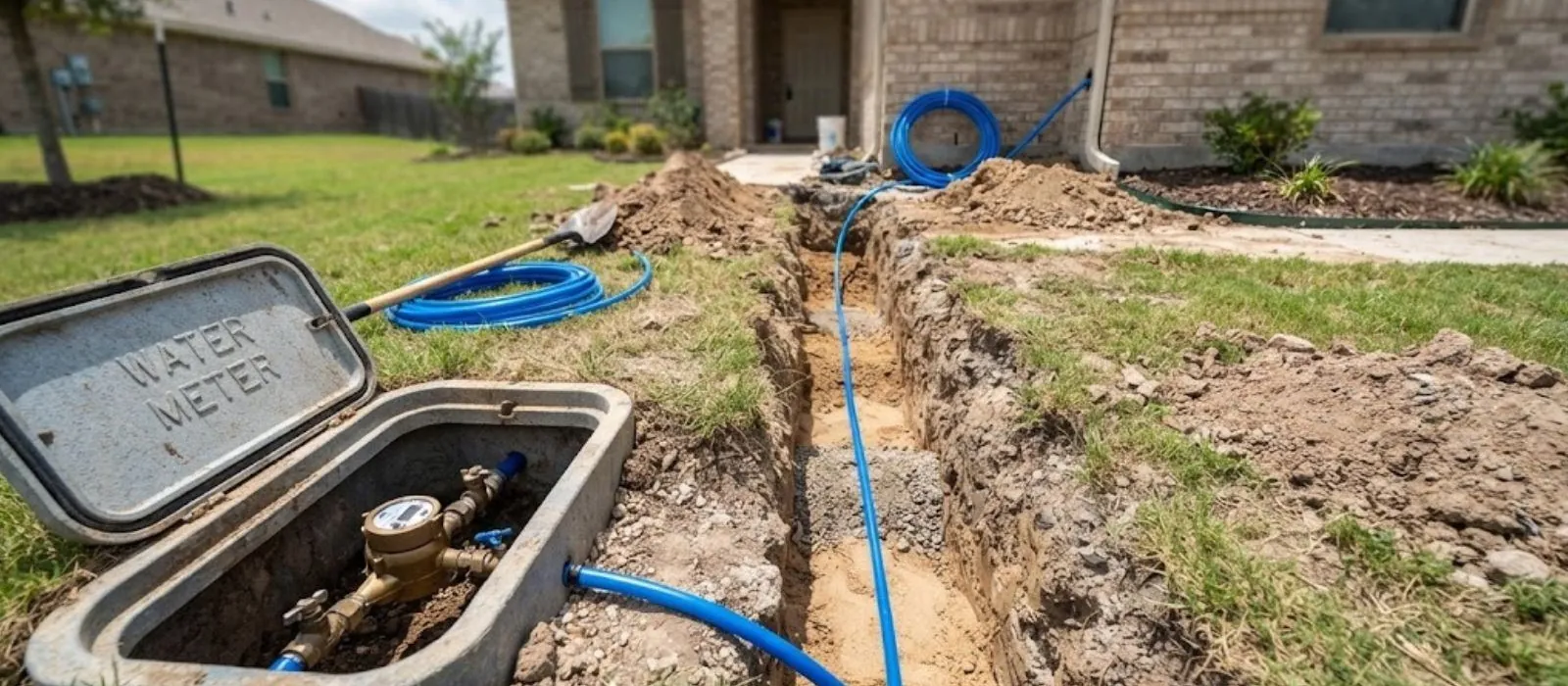
If water is bubbling up in the yard, the meter dial is spinning with every tap closed, or the whole house has lost pressure, the buried line between the meter and your house may have failed, and that is an emergency. Close the main shutoff valve inside the house, not the valve at the city meter, then call (503) 974-3329. Our 24/7 dispatch gets a licensed plumber moving, and the price is explained before any digging begins.
This page is about the underground water pipe that feeds the house, not the plumbing inside it. It covers how to shut water off safely, who to call at the City, how plumbers find and fix a buried leak, and the permits and locates that come with digging.
Right Now: Shut Water Off at the House, Not the Meter
Find the main shutoff valve where the line enters the house. It is often in a basement, crawlspace, garage or utility closet, near the water heater or on a front wall. Turn it clockwise until it stops. Open a faucet at the lowest point to drain what is left, and check that the flow stops.
Forest Grove policy is that customers and contractors never turn the water off at the city meter. If the house valve is stuck or missing, call Public Works at 503-992-3258 and the City will shut it off. There is no fee during business hours and a fee after hours. If the meter or line breaks because someone closed it, repairs are at the homeowner's expense.
Once the water is off, you can still call at any hour. Nights and weekends are covered by dispatch, and a plumber can be sent same-day when the schedule allows.
Where Your Responsibility Begins and Ends
Water utilities in this area do not all draw the line in the same place. Cornelius and Hillsboro both say the owner is responsible from the meter to the building, and North Plains tells residents to call a licensed plumber for a leak between meter and home. Forest Grove has its own rules, and we do not guess at them.
Before you pay for a repair, call Public Works at 503-992-3258 and ask where the City's responsibility ends and yours begins on your lot. Write down the answer. A plumber also needs to know exactly where the meter sits.
The City reports no lead or galvanized service lines needing replacement, so repair here is about leaks and damage, not removing toxic pipe. If the break came from a freeze, burst pipe repair may be part of the same visit.
Water off at the house and still unsure what failed? Call and describe what you see.
Call (503) 974-3329Signs a Buried Line Is Leaking
A service line leak does not show up in a sink. It shows up in the yard, the meter box or the water bill. Learn the signs, since a small leak can run for months before it surfaces.
| What you notice | What it suggests | First check |
|---|---|---|
| Soggy patch or bubbling in the yard. | Leak on the buried line. | Shut the house valve and see if the patch dries. |
| Meter dial moves with all water off. | Leak somewhere past the meter. | Compare readings across a two-hour no-use window. |
| Pressure dropped in the whole house. | Leak or partial break. | Test pressure at an outdoor spigot. |
| Dirty or muddy water. | Break pulling soil into the line. | Run cold water, then call right away. |
According to the EPA, you can read the meter, use no water for two hours, then read it again. If the number moved, something is leaking. It also says nine percent of homes have leaks wasting 50 gallons a day or more.
Pinpointing a Leak Under the Yard
Digging blind is expensive. Plumbers start by isolating the line, closing valves one at a time to decide whether the leak is on the service line or inside the house. If it is outside, listening gear, a pressure test and sometimes tracer gas narrow the spot to a few feet. Our page on finding hidden leaks covers the equipment.
Cost guides do not give one figure for tracing a buried line, so ask for the locating price before any digging starts. Pinning down the spot first often saves more than it costs.
Trench or Trenchless: Choosing How the Line Gets Replaced
A trenched repair opens the ground along the pipe, from a small spot hole for one leak to a full run for replacement. It is the simplest method and gives the plumber a view of the soil and bedding. Trenchless methods work from two small pits and pull new pipe through, which helps when the line runs under a driveway, a patio or large roots.
Trenchless is not always possible. The route must be clear, and bends or old repairs can block it. A plumber should explain why one method fits your yard. If the leak is a single failed fitting, a short spot repair is often enough. If the pipes inside are failing too, see repiping a house.
Permits and 811 Before Anyone Digs
Oregon requires a permit for building sewers and water service, and the person doing the work, homeowner or contractor, pulls it. In Forest Grove the City's Community Development office at 1924 Council St issues plumbing permits, phone 503-992-3229. Call early, since a permit expires if work does not start within 180 days.
Always call 811 before digging so gas, electric and other lines get marked. Forest Grove Light and Power is city-owned and NW Natural serves gas, so lines may run close to your water pipe. Call even when the repair is urgent. Cornelius contracts building services from the Forest Grove Building Division, and North Plains permits through Washington County, so confirm the office that applies.
Water Service Line Repair Costs and Why They Vary
HomeGuide reports $50 to $200 per foot to replace a service line by trenching. Angi's Portland average for water service line replacement is $2,065 with a range from $1,084 to $3,207. A short spot repair costs far less than a full run. These are guide numbers, not our price. You hear ours before work starts.
Length from meter to house
A long line costs more because per-foot pricing adds up.
What is on top of the pipe
Lawn is easy to restore. Concrete, pavers and mature roots cost more.
Depth and soil
Wet soil and rock slow digging and raise shoring needs.
Permit and locate steps
Permit fees and inspection scheduling are part of the job.
Homeowners policies often cover sudden water damage inside the house but may exclude the buried line itself or leaks from wear. Some insurers offer service line coverage as an add-on. Ask yours, and take photos before any cleanup.
Call (503) 974-3329 and a dispatcher can explain the steps, with a clear price before work starts.
Pressure Regulators and Backflow Devices Along the Line
Two devices often sit near where the line enters the house. A pressure-reducing valve, or PRV, lowers street pressure to a safe level. EPA says ideal home pressure is 45 to 60 psi and that most codes require a regulator where supply exceeds 80 psi. Angi lists PRV replacement at an average of $400 with a typical range of $200 to $700.
A backflow device keeps water from flowing backward into the supply. Irrigation lines and boilers commonly have one. HomeGuide lists testing at $30 to $300 per device. Ask about both while the line is open, and call (503) 974-3329 if you want them checked in the same visit.
Meter spinning, yard soaked or no water at all? Call now.
Call (503) 974-3329