

A blocked vent is usually cleared at the roof opening, and that is the risky part. Check from the ground first with binoculars. Going up is only reasonable on a low, dry, frost-free roof in daylight, with a secured ladder and a helper. If your Forest Grove roof is steep, wet, frosty or high, stay down and call a plumber.
Before you head outside, make sure the vent is really the problem. Gurgling and slow drains can come from a clog in the drain too. The sections below sort one from the other.
What a Vent Pipe Actually Does
Every drain in the house connects to a vent that runs up through the walls and out the roof. It does two jobs. It lets air into the drain system behind the water so wastewater flows out smoothly, and it lets sewer gases escape above the roof instead of into your rooms.
Think of pouring from a can with one hole. The liquid glugs and slows. A vent is the second hole. When it is blocked, water leaving a drain pulls air through the nearest trap instead, and you hear it as gurgling. In bad cases it can pull the water out of the trap that keeps sewer smell from entering the room.
Signs Your Vent May Be Blocked
No single sign proves it, but a cluster of them points upward.
- Gurgling from sinks, tubs or toilets after water drains elsewhere.
- Slow draining in several fixtures, with no clog you can find.
- A toilet bowl whose water level drops or bubbles.
- A sewer smell near drains or in the bathroom.
- A hollow, bubbling sound in the pipes after a big flush.
Slow draining is the clue most people notice first. If only one drain is slow, the clog is likely in that branch. If several are slow and gurgling at once, the vent or the main drain deserves a look.
Vent Blockage or Drain Clog: A Quick Sort
| What you notice | Points to a vent | Points to a drain clog |
|---|---|---|
| One fixture is slow. | Rarely | Yes, usually that branch. |
| Several fixtures gurgle | Often | Possible, if the main is partly blocked. |
| Water backs up out of a drain. | Rarely | Yes. |
| Sewer smell, no backup. | Often | Sometimes. |
| Clears for a day after plunging, then returns. | Sometimes | Yes. |
A true backup, with water or sewage rising in a tub or floor drain, is a drain problem, and it is the one that cannot wait. Stop using water and call. A vent problem on its own does not usually flood the house.
If your drains gurgle and you are not sure why, a licensed plumber can sort vent from drain.
Call (503) 974-3329What Tends to Block a Vent
The opening is a small pipe, often only a couple of inches across, and anything that settles there can restrict it. Common blockers include these.
- Leaves, needles and roof debris that drift or wash in.
- Nests built by birds or other animals that find the opening a handy spot.
- Roofing grit or debris left in the opening after other work.
- A cap or screen that has clogged.
- Damage or a crushed section somewhere along the run.
Blockages higher up are easier to reach. Damage lower inside a wall is a bigger job. A plumber may use a camera or a cable to find where the line narrows.
Looking First From the Ground
You can learn a lot without leaving the yard. Walk around the house and find the vent pipes sticking out of the roof. Binoculars show whether an opening is covered, packed with leaves or capped by a nest.
- Run water in the sink nearest the suspected vent and listen for gurgling.
- Flush the farthest toilet and watch whether other fixtures bubble.
- Look at each roof vent from the ground with binoculars.
- Look into the attic from the hatch only, without stepping off the framing, for obvious damage on the visible pipe.
- Write down which fixtures gurgle, for the plumber.
Those notes are useful. They tell a plumber which section of piping to look at first.
Roof Safety Comes Before Any Fix
Do not climb onto the roof in rain, frost, ice or wind. A wet or frosty roof is slick, and a fall from a ladder or eave can cause a serious injury. If you have any doubt, stay on the ground and call a plumber.
If conditions are dry and you decide to go up, take a few precautions. Place the ladder on firm, level ground and tie it off at the top. Wear shoes with grip. Keep a helper at the bottom. Stay clear of power lines and never lean over the edge to reach.
Steep pitch, high eaves, or a metal or tile roof are good reasons to stop. Many owners do the ground check and hand the climb to a professional. That is a sound call, not a failure.
Clearing It With a Hose and Cable
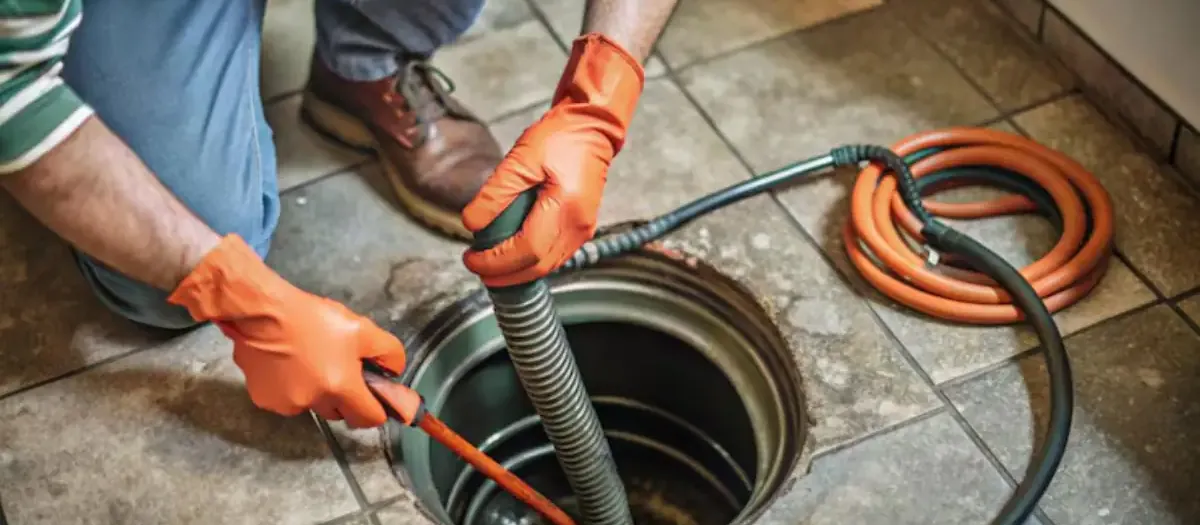
Once you are safely at the vent, pull out any debris you can reach by hand, with gloves. Then run a garden hose into the pipe on a low flow, and keep the water off the shingles because wet roofing is slick. If water drains slowly or rises, the block is deeper. A short plumber's cable or drain snake can reach further, though pushing hard can damage old piping.
Listen from indoors while the hose runs. If the gurgling stops, the vent is clear. If the pipe fills and does not drain, stop the water, because filling a vent without an outlet can back water into the house. At that point a professional should take over, and drain cleaning is the usual next step.
What It Costs
This is a thin area of published pricing. Only one cost guide we reviewed lists vent clearing, at about $150 to $200. Treat that as a rough marker, not a rule, because access, roof height and what is found all change the price.
| Item | Reported figure | Note |
|---|---|---|
| Plumbing vent clearing | About $150 to $200. | One guide only, treat as rough. |
| Drain cleaning, national (Angi). | $147 to $352 | Different job, useful comparison. |
A camera inspection can help when you cannot tell vent from drain. According to HomeGuide, a camera inspection runs $125 to $500, and the sewer inspection with a camera shows what the pipe is doing. Ask for the price before the work begins.
If You Also Smell Gas
A sewer smell and a natural gas smell are not the same. Gas has a rotten-egg odor added to it. If you are not sure which smell it is, treat it as gas.
Leave the building, call NW Natural at 800-882-3377 or 911 from outside, and do not use switches or phones inside. We do not diagnose gas leaks on the phone.
The same sorting steps apply in Banks and North Plains. Call (503) 974-3329 when the sorting leaves you unsure.
Forest Grove Note: Wet Roofs and Cold Mornings
Forest Grove gets about 46.72 inches of precipitation a year, with December averaging 8.72 inches and January 7.19. That means roofs stay wet for a good part of the winter, and wet shingles are slippery even when it is not raining at that moment. Dry daylight is the safest window for any roof work.
January's average low is 32.6 F, with December at 32.8 F and February at 33.1 F. Hard freezes are occasional, not constant, but a frosty morning can leave a roof and ladder icy. If the temperature is near freezing, wait until the roof is dry and warm, or call a plumber.