
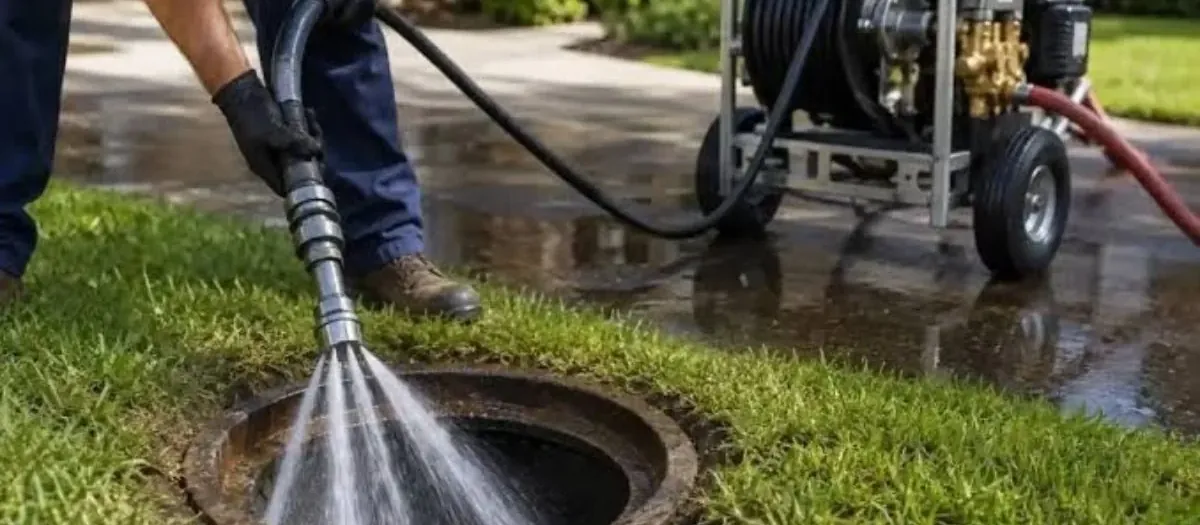
Hydro jetting is a drain-cleaning method that aims a high-pressure stream of water down a pipe to break up a blockage and scour the walls. According to the EPA, that approach is jetting, the most common hydraulic cleaning technique. A plumber usually runs a camera first to confirm the pipe can handle it.
Jetting is not a cure for every clog. A snake pokes a hole through a stoppage, while a jetter washes away the buildup that caused it. Below we cover how each tool works, what jetting handles well, when it is the wrong choice, and what cost guides report. For a particular drain, call (503) 974-3329.
How the Jetter Actually Works
A jetting unit pumps water through a flexible hose that ends in a nozzle. The nozzle has several small ports, some facing back and some forward. Water shoots out under pressure, which both pulls the hose down the pipe and scrubs the inside wall as it goes.
The plumber feeds the hose in until it reaches the clog, then pulls it back slowly while the water works. Grease, sludge and scale break loose and get flushed downstream.
Water pressure and nozzle choice are matched to the pipe. A small kitchen line takes a gentler setup than a large main line. A plumber who skips that step can damage the pipe, which is why the condition of the pipe comes before the machine.
Jetting Versus Snaking
Both clear drains, but they do different jobs. A drain snake, also called an auger, is a coiled cable with a head that spins into a clog. It punches through or hooks the obstruction. It is quick and cheap, but it leaves the walls coated.
| Point | Snake or auger | Hydro jetting |
|---|---|---|
| What it does | Opens a channel through the clog. | Scours the full pipe wall and flushes debris out. |
| Suited to | Hair, paper or a soft single blockage. | Grease, scale, sludge and root hair on the walls. |
| Typical cost-guide range | About $100 to $250. | About $350 to $600. |
| Weak spot | Clog can return if the walls stay coated. | Not suited to pipe that is cracked or collapsed. |
If a drain runs again after one snaking and stays clear, you probably needed nothing more. If it backs up every few months in the same spot, the pipe is likely coated and jetting makes sense.
Why a Camera Goes In First
Water at jetting pressure is hard on a damaged pipe. It can widen a crack, push through a weak joint or sweep loose a section that was holding itself together. The EPA describes sewer camera inspection as the most commonly used technique for looking inside a sewer, and it is the smart first move.
The camera shows what is blocking the line and what condition the pipe is in. It reveals roots, a sagging stretch, an offset joint, a cracked section or heavy scale. The plumber reads that picture and decides whether to jet, snake or repair.
Our sewer camera inspection answers the pipe-condition question before any pressure goes in. Ask for the footage, which helps if the line later needs repair.
If a drain keeps backing up, call and ask whether a camera and jetting fit your situation.
Call (503) 974-3329Grease, Roots and Other Things Jetting Handles
Grease is the most common target. It leaves the kitchen as hot liquid, cools inside the pipe and sticks to the wall. Layer after layer narrows the line until a bit of food finishes the job. Jetting cuts and flushes that coating. Clean Water Services asks residents not to pour grease down drains and runs a Freeze the Grease kit program at 503-681-3678.
Roots are different. Fine roots slip into a joint looking for moisture and then grow into a mat. A jetter with the right nozzle clears the hair-like growth, and the pipe works again. Roots come back, though, so a heavily invaded line may need regular maintenance or a repair.
Wipes and paper products are another culprit. CWS asks people not to flush wipes, even ones labeled flushable, or paper towels and mop refills. Those materials snag on rough spots and catch grease. Jetting can clear a wipe jam, but the better move is keeping them out of the toilet.
- Heavy grease in a kitchen drain line.
- Scale and sludge inside older pipe.
- Fine roots coating the inside of a lateral.
- Repeated slow drains with no single obvious blockage.
When Jetting Is the Wrong Tool
A camera sometimes shows a sag, a stretch of pipe that has sunk and holds a pool of water. Jetting clears the debris from it, but water pools again and the problem returns. A structural break, a collapsed section or a badly offset joint needs repair, not more water.
Old pipe deserves caution. Clay, cast iron and other older materials can be thin or brittle at the joints. In a town with homes dating back to the 1800s, plumbers sometimes decide to use a gentler approach or recommend repair. That is a judgment from the camera footage, not a rule.
If the camera finds a defect, sewer line repair is the next conversation. The plumber can show you the exact spot on the footage, which is what you want before agreeing to dig.
What Cost Guides Report for Jetting
Angi's national average for hydro jetting is $475 with a wide range of $100 to $2,000. Its Portland average is $501 and the range runs $369 to $632. HomeGuide says $600 to $1,400 for a main line when jetting is needed. Add a camera inspection, which guides put at roughly $125 to $1,000 depending on access and report.
| Service | Reported range |
|---|---|
| Snaking a main line. | About $100 to $250 (Angi). |
| Hydro jetting | About $350 to $600 (Angi), Portland average $501. |
| Main line when jetting is needed. | $600 to $1,400 (HomeGuide). |
| Sewer camera inspection | Roughly $125 to $1,000 depending on access and report. |
These are guide figures, not a promise about your drain. Price moves with access, line length, how much buildup there is and the time of day you call. We give a clear price before work starts, so the number is settled before the jetter is set up.
Keeping the Line Clear After the Work
A fresh jetting is only as good as what follows. Scrape plates into the trash, not the sink. Let cooking fat cool in a can. Keep wipes out of the toilet, and use drain strainers in showers and tubs.
If you want a routine program, ask a plumber about scheduled drain cleaning for lines with a history. To plan a visit, call (503) 974-3329.
Forest Grove Note: Who Owns Which Part of the Sewer
In Forest Grove the City maintains sewer collection lines smaller than 24 inches and all manholes. Trunk lines, lift stations and the Fernhill Treatment Facility fall to Clean Water Services. The private lateral, from your house to the connection at the public sewer, belongs to the property owner under City Ordinance 52.03.
Neighbors in Hillsboro have a similar split, and the city's Lateral Accuracy Project, started in 2021, is marking the roughly 30,000 laterals there. In North Plains, CWS provides sewer service and the owner owns the lateral. For sewer emergencies after hours in Forest Grove, the City line is 503-412-2444.